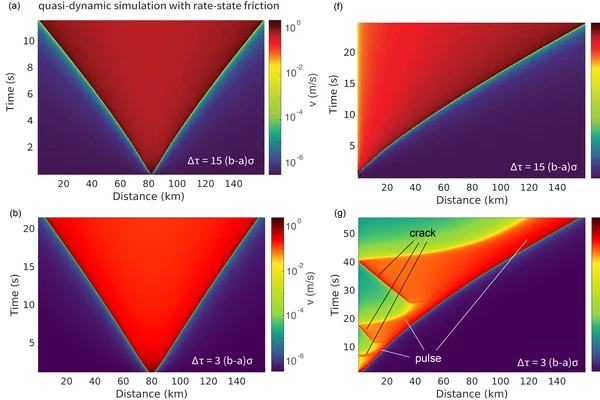
Earthquake complexity and scaling laws
Connecting fracture mechanics at a microscopic scale to the timing, extent, and complexity of earthquake ruptures.
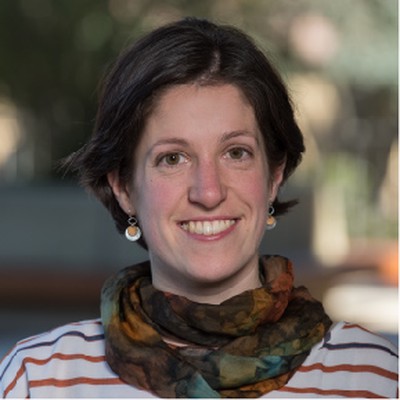
Cecil & Ida Green Career Development
Professor of Geophysics
Massachusetts Institute of Technology
Welcome! I’m the Cecil & Ida Green Career Development Professor of Geophysics in the Department of Earth, Atmospheric, and Planetary Sciences at MIT, where I lead a research group on fault mechanics and earthquake physics.
My group investigates how faults slip and earthquakes rupture — for example, what controls the size and complexity of earthquakes, how and where they initiate, and how slow and fast slip interact at plate boundaries. We tackle these problems with a first-principles approach that combines fracture mechanics, friction theory, and numerical simulations. In addition to furthering our understanding of earthquake physics, I am interested in ways to integrate state-of-the-art knowledge into practical tools, and in particular models to use in operational earthquake forecasting.
I welcome inquiries from motivated graduate students and postdocs looking to join my group - please get in touch if interested.
Connecting fracture mechanics at a microscopic scale to the timing, extent, and complexity of earthquake ruptures.
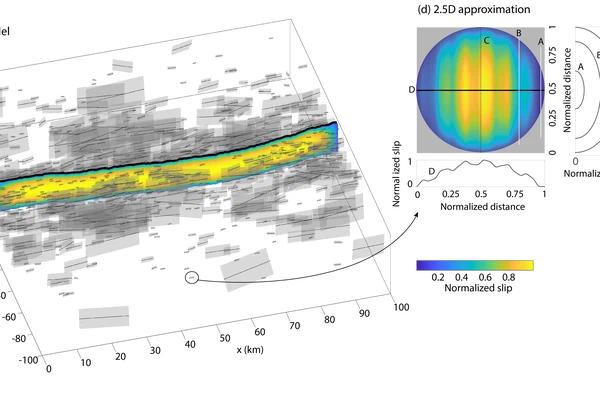
How fault roughness and geometrical complexity in the damage zone affect normal stress, earthquake nucleation, and seismicity.
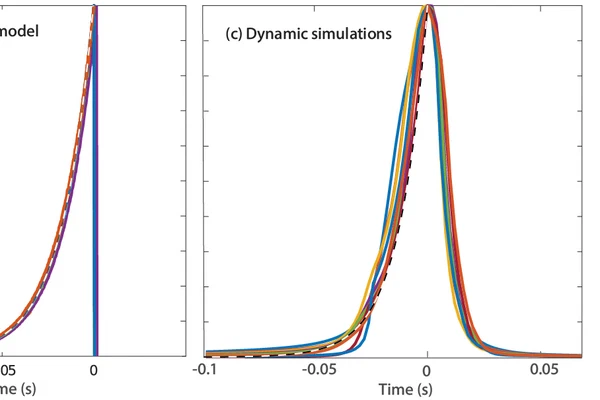
Advancing theoretical models of earthquake nucleation and uncovering its seismological signature.
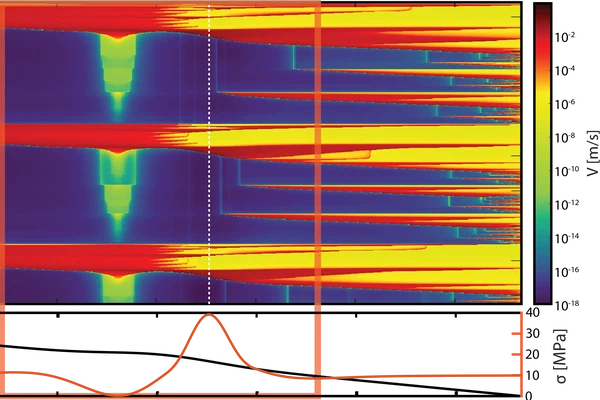
The roles of depth-dependent rheology and structural heterogeneity in the interplay of slow deformation and earthquakes in subduction zones.
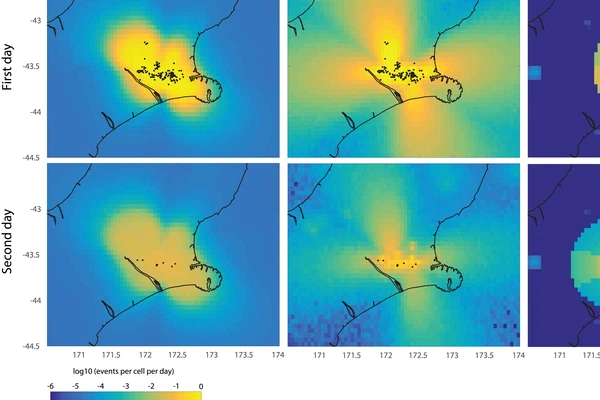
Physics-based models of static, dynamic, and magmatic stress triggering, and their application to operational earthquake forecasting.
Sun,Y., C. Cattania (2026). Back-propagating earthquakes on simple faults. AGU Advances. DOI: 10.1029/2025AV001649
Moser,L., C. Cattania, M. Peč (2026). Temperature insensitive viscous deformation limits megathrust seismogenesis. Earth and Planetary Science Letters, 673, 119698. DOI: 10.1016/j.epsl.2025.119698
Aguilar Suarez,A. L., P. Segall, C. Cattania (2025). Pore pressure perturbations on rough fault earthquake cycle simulations. Bulletin of the Seismological Society of America. DOI: 10.1785/0120250035
Song,Y. L., C. Cattania, G. C. McLaskey (2025). Fault healing and asperity partitioning on a frictionally heterogeneous laboratory fault. Journal of Geophysical Research: Solid Earth. DOI: 10.1029/2025jb032055
Castellano,M., E. Milanese, C. Cattania, D. S. Kammer (2025). A numerical study on the role of wear during seismic cycles of rough faults. Journal of Geophysical Research: Solid Earth. DOI: 10.1029/2025jb032198
PhD Candidate
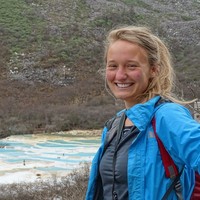
Roos’s research investigates how subducted seamounts affect the earthquake cycle, combining numerical simulations with theoretical analysis. She has shown that seamounts can promote a wide variety of slip behaviors on simple faults. Her current work extends this understanding to frictionally heterogeneous faults. Additionally, she is currently exploring the fault and stress conditions that lead to slow slip events.
Research Specialist
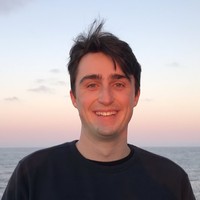
Liam recently received a PhD in Geophysics from the MIT-WHOI Joint Program. He is currently researching what causes glaciers to either slide continuously or fail catastrophically by adapting frictional stability models used for earthquakes to glacial deformation. During his PhD, Liam used seismic traveltime tomography to generate structural models of the Alaska and Cascadia subduction zones. He applied rock physics and fault mechanics models to connect subduction zone structure to both earthquake behavior and water cycling between the ocean and solid Earth. Furthermore, he developed frictional-viscous models to help explain the downdip limit of the subduction seismogenic zone.
PhD Student
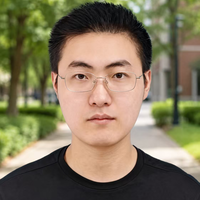
Wangyang Shang is a PhD student working with Professor Camilla Cattania. He received a Bachelor’s degree in Geophysics (2023) and a Master’s degree in Seismology (2026) from Nanjing University. His previous research used numerical simulations to investigate how viscoelasticity influences earthquake rupture dynamics. He is interested in understanding the physical processes that govern earthquake rupture.
Postdoc
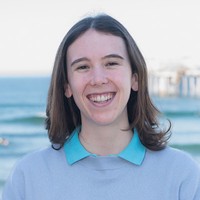
Gabrielle Hobson is a computational geophysicist with an interest in subduction zones, earthquake dynamic rupture, and the seismic cycle. In 2025 she earned her Ph.D. in Earth Sciences, advised by Prof. Dave May, at the Institute of Geophysics and Planetary Physics (IGPP) at Scripps Institution of Oceanography, UCSD. Prior to this, she completed her B.S in Applied Mathematics from the University of North Carolina at Chapel Hill. Her research focuses on applying model order reduction to enable sensitivity analysis and uncertainty quantification for geophysical problems. During her Ph.D. work, she developed highly efficient reduced-order models as surrogates for models of subduction zone temperature, subduction and mantle flow dynamics, and earthquake dynamic rupture. As a Postdoctoral Researcher at IGPP, she worked with Prof. Alice-Agnes Gabriel on quantifying the influence of variable fault geometry on earthquake dynamic rupture. Her postdoctoral work at MIT will focus on leveraging model order reduction to investigate epistemic uncertainty in seismic cycle modeling.